There are style icons who are born, and then there are style icons who are forged in the fire of public scrutiny. Princess Diana belongs to the latter. Her sartorial life was a public evolution, a visual diary of a woman finding her voice in a system designed to keep her silent. To look at photos of Diana from 1980 to 1997 is to watch a girl grow into a woman, and a victim grow into a victor. For a fashion consultant, Diana is the ultimate case study in the psychology of clothing—how we use what we wear to protect ourselves, to project confidence, and eventually, to tell the truth.
We first met her as “Shy Di,” a teenager in pie-crust collars, Laura Ashley florals, and shapeless sweaters. In those early years, her clothes were a shield. She dressed according to the “Sloane Ranger” archetype of the British aristocracy—conservative, safe, and slightly frumpy. She was playing a role that had been written for her: the demure fairytale princess. But even then, there were sparks of the icon she would become—a penchant for a bold colour, a playful sheep sweater—hints that a personality was bubbling beneath the taffeta.
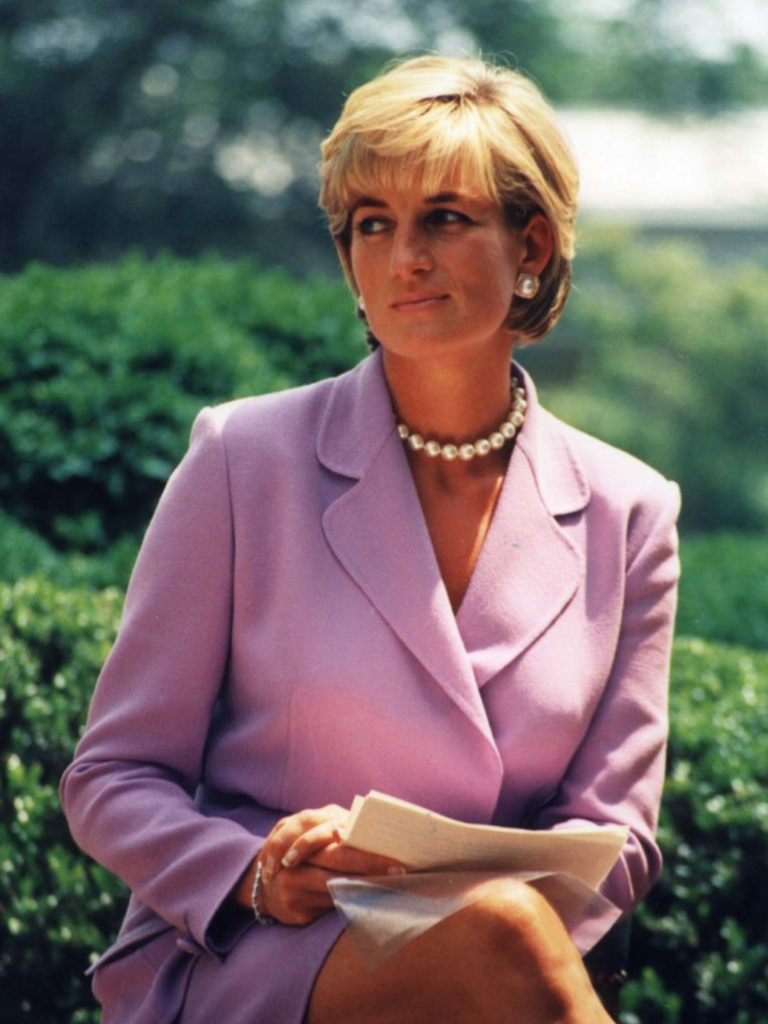
As her marriage grew tumultuous, her wardrobe sharpened. This is the era of “Dynasty Di.” She began to understand the power of the silhouette. The frills disappeared, replaced by wide-shouldered blazers, body-conscious Versace dresses, and bold, color-blocked suits. She realized that the cameras were going to follow her regardless of what she did, so she decided to control the narrative through her image. She used fashion as a tool of diplomacy and connection. She famously stopped wearing gloves because she wanted to feel the hands of the people she shook; she stopped wearing hats to children’s hospitals because “you can’t cuddle a child in a hat.” She weaponized her wardrobe to break down the barriers between the monarchy and the public.
And then, there was The Moment. June 1994. The night Prince Charles confessed to his adultery on national television. Diana stepped out to a gala at the Serpentine Gallery in a dress that would go down in history: the “Revenge Dress.” It was a black, off-the-shoulder, form-fitting Christina Stambolian cocktail dress that violated several royal protocols. It was sexy, it was daring, and it was glorious. Without saying a single word, she told the world, “I am not defeated. I am thriving.” It remains the single most powerful example of fashion as a retort.
However, her influence on modern style is perhaps most heavily felt in her “off-duty” attire. Diana invented the high-low aesthetic of modern athleisure. The images of her running errands in London—wearing oversized collegiate sweatshirts (Harvard, Virgin Atlantic), biker shorts, thick white socks, and chunky sneakers—are the blueprint for Gen Z fashion today. She looked effortlessly cool because she was dressing for herself, not the palace. She paired blazers with jeans and baseball caps, mixing the formal with the functional in a way that felt approachable and real.
Diana’s legacy is complex, but sartorially, it is a story of liberation. She moved from dressing to please others to dressing to please herself. She showed us that a wardrobe can be a biography. She taught me that it is okay to change—that your style should evolve as you do. You are allowed to shed the skins that no longer fit you, whether that means a marriage or a style of dress.
She was the “People’s Princess” not just because of her charity work, but because she was relatable. We saw her awkward phases, her glamorous peaks, and her vulnerable moments, all reflected in her clothes. She proved that style is not just about aesthetics; it is about communication. When she couldn’t speak, she let her clothes scream. And in doing so, she became timeless.